
Tough Talk: Authentic Faith | Deborah Marsh

Tough Talk: Authentic Faith | Deborah Marsh

Our November sermon series takes a look at some of Jesus’ teaching from the Gospels which can be hard. Hard to understand or hard to put into practice, or both! Jesus’ call to take up our cross and follow him comes at a cost but the benefits are always rich, deep and wide as we surrender every area of our lives to him.  

Matthew 17:20-21 

 Truly I tell you, if you have faith as small as a mustard seed, you can say to this mountain, “move from here to there,” and it will move. Nothing will be impossible for you. Matt 17:20-21 

 The setting of this bold claim is the disciples failing to heal a demon possessed boy and so that Father goes to Jesus for help. He immediately heals him and rebukes those in his hearing for their unbelief. He seems to make the link between lack of faith and failure to heal. This generates lots of questions about the relationship between faith and healing and faith and answer to prayer. Jesus teaches that faith as small as a mustard seed has the power to tell a mountain to move and it will! It’s a big claim and Jesus is employing hyperbole to make his point that faith is crucial in the kingdom of God.  

Why is faith so central to the life of a disciple? Is it possible to live like Jesus described and not have unbelief in your heart, is that what Jesus is getting at here? Is doubt wrong? How do we handle our own and others doubts? 

Hebrews 11v1 describes faith as ‘confidence in what we hope for and assurance about what we do not see.’ Jesus is the object of our faith, and we can be sure about who he is, what he has done for us and that he knows the end of the story! Jesus is also the perfector of our faith (Heb 12v2). We can be confident of these things and that gives us authority in our lives to live for him, usher in Gods kingdom and pray for mountains to move! 
Tough Talk - Authentic Faith
Deborah Marsh

Tough Talk: Love your Enemies | Jane Taylor

Tough Talk: Love your Enemies | Jane Taylor

Our November sermon series takes a look at some of Jesus’ teaching from the Gospels which can be hard. Hard to understand or hard to put into practice, or both! Jesus’ call to take up our cross and follow him comes at a cost but the benefits are always rich, deep and wide as we surrender every area of our lives to him.  

Matthew 5:44, Matthew 5:38-48

But I say to you love your enemies and pray for those who persecute you. Matt 5v44.

Jesus teaches us to ‘love your neighbour as yourself’ which is a hard teaching (Leviticus 19:18, Matthew 22:39, Mark 12:31, Luke 10:27, Romans 13:9, Galatians 5:14, and James 2:8) Jesus also notes that others ‘will know that we are his disciples because of our love for one another. (Jn 13:35). But this teaching in Matthew is off the charts hard and ups the stakes. If you don’t have any enemies maybe it doesn’t seem that tricky, but most of us will have relationships that have broken down, colleagues that we find hard to work alongside or will have been hurt badly by others words, attitudes or behaviour. Jesus tells us to love these people and to employ prayer to help us. Love and prayer are key to Jesus’ teaching here, both are powerful, and both are impossible to do in our own strength. We need the supernatural power of the Holy Spirit.

Explore why Jesus teaches this? What it is about loving our enemies that is so Kingdom of God like but often absent in the world as we look out at the chaos, confusion and conflict. Jesus’ beautiful example of loving his enemies from the cross is astounding, Luke 23v34. Are there any current examples in our culture or congregations of those who are loving their enemies. What difference has that made to them and the situations they are in? What about when you choose to love your enemies, but the situation doesn’t seem to change, how do we remain faithful to Jesus and not slip into bitterness and disappointment?

What does it look like to pray for your enemies? How? Remembering that we are in a spiritual battle as well as a human one! Eph 6v12.How do we put these words of Jesus into practice? What are some practical steps and how to’s from scripture that will equip us to put Jesus words into practice. How do we keep our hearts soft in the process? Prov 4v23. How do we love our enemies if they are still behaving as our enemies and reconciliation is not possible or appropriate?
Tough Talk - Love your Enemies
Jane Taylor

Tough Talk: Friend of Sinners | Tom Dove

Tough Talk: Friend of Sinners | Tom Dove

Our November sermon series takes a look at some of Jesus’ teaching from the Gospels which can be hard. Hard to understand or hard to put into practice, or both! Jesus’ call to take up our cross and follow him comes at a cost but the benefits are always rich, deep and wide as we surrender every area of our lives to him.  
Mark 2:17, Mark 2:13-17 

It is not the healthy who need a doctor but the sick. I have not come to call the righteous, but sinners. Mark 2:17 

Jesus is at Levi’s house eating with tax collectors and sinners some of whom were following him. The Pharisees saw this and questioned why Jesus could do this, they were baffled by his behaviour. In Luke 7:39 Simon another Pharisee rebuked Jesus for letting a sinful women anoint his feet. 

Jesus had no issue with spending time with sinners, outcasts, the sick, women or those who were polluted. His mission was to call sinners to himself. In the preceding verses he has just forgiven the sins of the paralysed man and then healed him. Spiritual sickness and physical sickness were not a problem for Jesus and his power overcomes both. Far from being polluted by others sin and brokenness, Jesus redeems, heals and cleanses those who reach out for him and accept him. He was called the ‘friend of sinners’ Luke 7:34. We all need him as our friend because we are all sinners! 

 Explore what sin is and how it pollutes us / relationships / lives, we mustn’t downplay its seriousness. Without Jesus sin leads to death and separation from God forever, Rom 6:23. How do we treat our own sin, how do we practice confession? The only way to be ultimately free of its power is through Jesus’ death and resurrection. This is an opportunity to preach the gospel and give folk a chance to respond. 

 Explore the trap of religion. It’s so often the religious that are the first to judge, forgetting that they too need saving and are sinners. Why is this? How might we fall into that trap. Log, speck and eyes spring to mind! In Lukes account he adds, ‘calls sinners to repentance’ 5:32. What is repentance and how do we as Jesus followers stay in this place of repentance from our sin which we will continue to wrestle with. 

Tough Talk - Friend of Sinners
Tom Dove

Tough Talk: The way of the Cross | Tim Dobson

Tough Talk: The way of the Cross | Tim Dobson

Our November sermon series takes a look at some of Jesus’ teaching from the Gospels which can be hard. Hard to understand or hard to put into practice, or both! Jesus’ call to take up our cross and follow him comes at a cost but the benefits are always rich, deep and wide as we surrender every area of our lives to him.  

Matthew 16:24, Matthew 16:13-28

Whoever wants to be my disciple must deny themselves and take up their cross and follow me.’ Matthew 16v24.

This teaching comes just after Peter has declared that Jesus is the Messiah v16 - a highpoint in Matthew’s Gospel as Jesus identity is revealed. No sooner has this revelation come then the reality of what Jesus as Messiah will have to go through is also described. He will die and rise again. It is in this context that Jesus speaks to the disciples and tells them they too must take the road of denial and take up their cross. If Peter wants to follow Jesus, then following him to death is a possibility, for some persecuted Christians today this is a reality.

Denial can be quite tame these days; in Lent it can be anything from fasting from Netflix to missing breakfast! What is Jesus asking his disciples to do in this verse? The imagery of the cross was a very vivid one in the ancient near East as Jesus would come to experience and the disciples would witness. How does this teaching apply to us today? Paul talks about dying every day, 1 Cor 15v31 and carrying the death of Jesus in his body 2 Cor 4:10-11 and how he shares in Jesus’ sufferings and the power of his resurrection Phil 3v8,10. Death and suffering for Jesus and us is never the end of the story. Resurrection and life is!

Tough Talk - The way of the Cross
Tim Dobson

ABRAHAM: Testing Times | Catherine Penn

ABRAHAM: Testing Times | Catherine Penn

Over September and October we’re looking at the story of Abraham. One person, chosen by God, who He asks to put faith in Him and be obedient to Him. We will journey with Abraham in his faith and his fear, his obedience and his failure. But what we’ll see most clearly is a God who is faithful through it all.  

Genesis 22:1–19; Hebrews 11:17-19

On Mount Moriah, God gave Abraham the ultimate test - a command that made no sense, cut to the heart, and demanded total surrender. How did Abraham react and why? What can we learn about trusting God even when life makes no sense? And how does it point to of the sacrifice God would one day provide for us all?

Testing Times
Catherine Penn

ABRAHAM: Standing in the gap | Dave Mitchell

ABRAHAM: Standing in the gap | Dave Mitchell

Over September and October we’re looking at the story of Abraham. One person, chosen by God, who He asks to put faith in Him and be obedient to Him. We will journey with Abraham in his faith and his fear, his obedience and his failure. But what we’ll see most clearly is a God who is faithful through it all.  

Genesis 18:16–33

Abraham’s nephew lived in a place of brokenness and exploitation. We don’t have to look far to see this in our world. How can we be inspired by the actions of Abraham as he stood in the gap between God and the broken places around him? What does God’s response to Abraham tell us about His nature and character?

Standing in the gap
Dave Mitchell

ABRAHAM: The God who sees | Laura Harris

ABRAHAM: The God who sees | Laura Harris

Over September and October we’re looking at the story of Abraham. One person, chosen by God, who He asks to put faith in Him and be obedient to Him. We will journey with Abraham in his faith and his fear, his obedience and his failure. But what we’ll see most clearly is a God who is faithful through it all.  

Genesis 16:1–16

Sarai and Abram try to fulfil God's promise through Hagar. When we do things our way rather than God’s, people can get hurt. The passages involving Hagar, Abram and Sarai can be difficult to process. What can we learn about God through them? What can we learn about ourselves?

The God who sees
Laura Harris

ABRAHAM: A promise | Naomi Clarke

ABRAHAM: A promise | Naomi Clarke

Over September and October we’re looking at the story of Abraham. One person, chosen by God, who He asks to put faith in Him and be obedient to Him. We will journey with Abraham in his faith and his fear, his obedience and his failure. But what we’ll see most clearly is a God who is faithful through it all.  

If God’s promise of a new nation was to be fulfilled, then it depended on something that Abram and Sarai couldn’t accomplish in their own ability. All of it was based on the miraculous birth of a promised son. How does Abram’s story point towards Jesus? What promises does God give to us? What do we need to do to accept and live in them? How does baptism fit with all of this?  

A promise
Naomi Clarke

ABRAHAM: Generosity and Grace | Clare Thompson

ABRAHAM: Generosity and Grace | Clare Thompson

Over September and October we’re looking at the story of Abraham. One person, chosen by God, who He asks to put faith in Him and be obedient to Him. We will journey with Abraham in his faith and his fear, his obedience and his failure. But what we’ll see most clearly is a God who is faithful through it all.  

The land couldn’t sustain both Abram’s animals and his nephew’s. A scarcity mindset created tension and arguments. But Abram chose not to give in to this way of thinking. He let Lot choose the best land first. What prompted Abram to do this? How does our scarcity mindset impact us? And how does our relationship with God help us to deal with it?  

Generosity and Grace
Clare Thompson

ABRAHAM: A Detour of Fear | Tim Dobson

ABRAHAM: A Detour of Fear | Tim Dobson

Over September and October we’re looking at the story of Abraham. One person, chosen by God, who He asks to put faith in Him and be obedient to Him. We will journey with Abraham in his faith and his fear, his obedience and his failure. But what we’ll see most clearly is a God who is faithful through it all.  

Abram left his home after being called by God. The excitement and anticipation of God’s promised blessing must have created a spiritual high for Abram. But then reality set in as famine hit the land. How did Abram respond when faced with the challenges of life? (Spoiler alert - not so well!) But how does God respond to Abram’s lack of faith and fear-filled actions? What can we learn about how God sees our fears and failures?

ABRAHAM: A Detour of Fear
Tim Dobson

ABRAHAM: A call to go | Deborah Marsh

ABRAHAM: A call to go | Deborah Marsh

Over September and October we’re looking at the story of Abraham. One person, chosen by God, who He asks to put faith in Him and be obedient to Him. We will journey with Abraham in his faith and his fear, his obedience and his failure. But what we’ll see most clearly is a God who is faithful through it all.  

In the first talk of our series, Deborah Marsh looks at Abram being called by God to leave his country.

ABRAHAM: A call to go
Deborah Marsh

PHILIPPIANS: Chapter 4 | Ed Marsh

PHILIPPIANS: Chapter 4 | Ed Marsh

While in prison, Paul wrote one of the most encouraging letters in all the Bible, the letter to the church in Phillipi.

Throughout July, we’ll be looking at this letter a chapter a week and exploring how to live with a God-given purpose in the midst of everything life throws at us.

In the final talk of our series, Ed Marsh looks at the phrase, “rejoice in the Lord always” and asks how we can apply this in our daily lives.

PHILIPPIANS: Chapter 4
Ed Marsh

PHILIPPIANS: Chapter 3 | Dave Mitchell

PHILIPPIANS: Chapter 3 | Dave Mitchell

While in prison, Paul wrote one of the most encouraging letters in all the Bible, the letter to the church in Phillipi.

Throughout July, we’ll be looking at this letter a chapter a week and exploring how to live with a God-given purpose in the midst of everything life throws at us.

In the third talk of this series, Dave Mitchell looks at how we can pursue Jesus over the long haul of life and finish well.

PHILIPPIANS: Chapter 3
Dave Mitchell

PHILIPPIANS: Chapter 2 | Andy Waller-Simpson

PHILIPPIANS: Chapter 2 | Andy Waller-Simpson

While in prison, Paul wrote one of the most encouraging letters in all the Bible, the letter to the church in Phillipi.

Throughout July, we’ll be looking at this letter a chapter a week and exploring how to live with a God-given purpose in the midst of everything life throws at us.

In this second talk, Andy Waller-Simpson asks:

  • what living in community teaches us about selfless love?

  • Who our role models are?

  • How important is it to follow an example in discipleship?

PHILIPPIANS: Chapter 2
Andy Waller-Simpson

PHILIPPIANS: Chapter 1 | Deborah Marsh

PHILIPPIANS: Chapter 1 | Deborah Marsh

While in prison, Paul wrote one of the most encouraging letters in all the Bible, the letter to the church in Phillipi.

Throughout July, we’ll be looking at this letter a chapter a week and exploring how to live with a God-given purpose in the midst of everything life throws at us.

In this first talk, Deborah asks what devotion to Jesus looks like.

PHILIPPIANS: Chapter 1
Deborah Marsh

PSALMS - PRAYERS FOR PEAKS AND VALLEYS: Psalm 23 | Rachel Clark

PSALMS - PRAYERS FOR PEAKS AND VALLEYS: Psalm 23 | Rachel Clark

Psalm 23 - TRUST IN GOD

The Psalms are like a songbook and prayerbook for real life.

Instead of pretending everything is fine, they help us bring our honest emotions to God. At the same time, they gently reshape how we see things, reminding us of who God really is—faithful, in control, full of mercy, and always worthy of our trust and praise.

In the final talk of this series, Rachel Clark looks at Psalm 23 to see what it means to truly trust God in our daily lives.

PSALMS - PRAYERS FOR PEAKS AND VALLEYS: Psalm 23
Rachel Clark

PSALMS - PRAYERS FOR PEAKS AND VALLEYS: Psalm 42 | Catherine Penn

PSALMS - PRAYERS FOR PEAKS AND VALLEYS: Psalm 42 | Catherine Penn

Psalm 42 - SUFFERING AND LAMENT

The Psalms are like a songbook and prayerbook for real life.

Instead of pretending everything is fine, they help us bring our honest emotions to God. At the same time, they gently reshape how we see things, reminding us of who God really is—faithful, in control, full of mercy, and always worthy of our trust and praise.

Catherine Penn looks at what Psalm 42 teaches us about being real with God in times of challenge, distress or sorrow.

PSALMS - PRAYERS FOR PEAKS AND VALLEYS: Psalm 42
Catherine Penn

PSALMS - PRAYERS FOR PEAKS AND VALLEYS: Psalm 67 | Nia Clarke, Hope Roberts and Toby Marsh

PSALMS - PRAYERS FOR PEAKS AND VALLEYS: Psalm 67 | Nia Clarke, Hope Roberts and Toby Marsh

Psalm 67 - MISSION

The Psalms are like a songbook and prayerbook for real life.

Instead of pretending everything is fine, they help us bring our honest emotions to God. At the same time, they gently reshape how we see things, reminding us of who God really is; faithful, in control, full of mercy, and always worthy of our trust and praise.

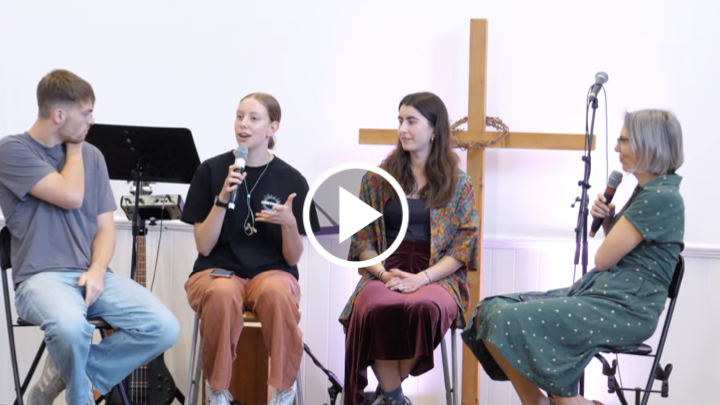
On our Global Partner weekend, Deborah interviews three members of the church congregation about their recent mission trips.

PSALMS - PRAYERS FOR PEAKS AND VALLEYS: Psalm 67
Nia Clarke, Hope Roberts, Toby Marsh

PSALMS - PRAYERS FOR PEAKS AND VALLEYS: Psalm 100 | Ed Marsh

PSALMS - PRAYERS FOR PEAKS AND VALLEYS: Psalm 100 | Ed Marsh

Psalm 100 - WORSHIP

The Psalms are like a songbook and prayerbook for real life.

Instead of pretending everything is fine, they help us bring our honest emotions to God. And at the same time, they gently reshape how we see things, reminding us of who God really is—faithful, in control, full of mercy, and always worthy of our trust and praise.

Ed Marsh continues our series with a look at what Psalm 100 teaches us about worship.

PSALMS - PRAYERS FOR PEAKS AND VALLEYS: Psalm 100
Ed Marsh

PSALMS - PRAYERS FOR PEAKS AND VALLEYS: Psalm 46 | Rob Scott-Cook

PSALMS - PRAYERS FOR PEAKS AND VALLEYS: Psalm 46 | Rob Scott-Cook

Psalm 46 - Refuge, Renewal and Rest

The Psalms are like a songbook and prayerbook for real life.

Instead of pretending everything is fine, they help us bring our honest emotions to God. And at the same time, they gently reshape how we see things, reminding us of who God really is—faithful, in control, full of mercy, and always worthy of our trust and praise.

Rob Scott-Cook introduces our new series by looking at Psalm 46.

PSALMS - PRAYERS FOR PEAKS AND VALLEYS: Psalm 46
Rob Scott-Cook